

How to Select a Dispensing Pump for Automotive Adhesive Applications
Selecting the right dispensing pump is one of the most consequential decisions in designing an adhesive application system. The pump determines flow accuracy, pressure stability, material compatibility, and ultimately the consistency of every bead your system produces. In automotive manufacturing, where structural bonds and seals are subject to quality audits and long-term performance requirements, pump selection deserves more attention than it typically receives.
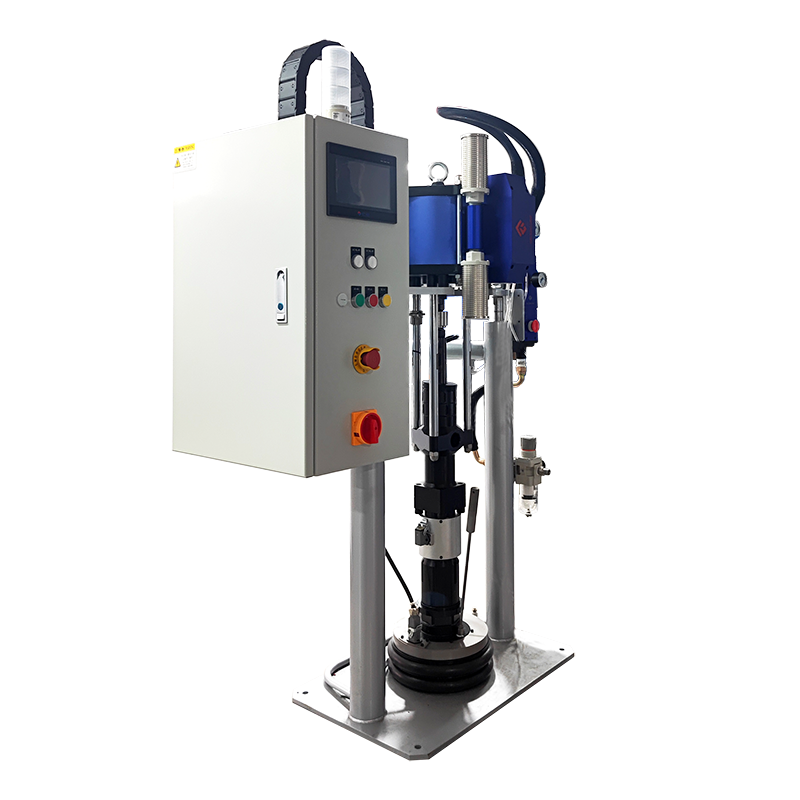
This guide covers the key parameters for selecting a dispensing pump in automotive adhesive applications, including material type, flow requirements, and system integration considerations.
Understanding the Application Before Selecting a Pump
Before evaluating pump types, define the application requirements clearly. Two adhesive applications on the same production line can have completely different pump requirements depending on material viscosity, required output volume, cycle rate, and bead geometry.
The following parameters should be established before any pump selection is made:
Material viscosity range. Adhesives and sealants used in automotive manufacturing span a wide viscosity range — from 500 cP for low-viscosity primers to over 500,000 cP for high-viscosity structural adhesives and polyurethane sealants. The pump type that handles a thin primer efficiently is not the same pump that handles a high-viscosity body seam sealer.
Required flow rate. Define the output volume per cycle, the number of cycles per shift, and the total daily output volume. This determines whether you need a pump optimized for precision micro-dispensing or one designed for high-throughput bulk output.
Required flow accuracy. Body seam sealing tolerates more variation than structural bonding. Acoustic sealant applications may require tight volume control to meet weight and coverage specifications. Define your acceptable flow accuracy tolerance — typically expressed as a percentage deviation from target output — before evaluating pumps.
Operating pressure. The pump must generate sufficient pressure to push material through your dispensing hose, valve, and gun at the required flow rate. Factor in hose length, inner diameter, and the viscosity of the material at operating temperature. High-viscosity materials and long hose runs require significantly more pressure than low-viscosity materials dispensed at close range.
Material temperature. Many automotive adhesives are heated to reduce viscosity and improve flow. If your application uses heated material, the pump must be rated for the operating temperature and the viscosity characteristics of the material at that temperature.
Pump Types Used in Automotive Adhesive Dispensing
Three pump types account for the majority of automotive adhesive dispensing applications: gear pumps, piston pumps, and progressive cavity pumps. Each has distinct performance characteristics suited to different applications.
Gear Pumps
Gear pumps use two meshing gears rotating inside a close-tolerance housing to displace material. They deliver continuous, pulse-free flow and are well suited to low-to-medium viscosity materials dispensed at consistent flow rates.
Advantages: Smooth continuous output, compact design, good flow consistency for medium-viscosity materials, relatively low cost.
Limitations: Not well suited to abrasive materials or filled adhesives, as the tight gear-to-housing clearances wear quickly when abrasive particles are present. Output volume per revolution is fixed, so flow rate adjustment requires changing motor speed.
Typical automotive applications: Primer application, thin-film adhesive dispensing, low-viscosity sealant application.
Piston Pumps
Piston pumps use a reciprocating piston to displace material through a check valve arrangement. They can generate high pressure and handle a wide range of viscosities, including high-viscosity materials that would stall a gear pump.
Advantages: High pressure capability, handles high-viscosity materials and filled adhesives, good for abrasive materials, accurate volume per stroke.
Limitations: Pulsating output requires a downstream pressure accumulator or pulsation dampener for applications requiring continuous bead geometry. Slightly more complex maintenance than gear pumps.
Typical automotive applications: Structural adhesive bonding, high-viscosity polyurethane sealing, anti-corrosion wax injection, door hem flange bonding.
Progressive Cavity Pumps
Progressive cavity pumps use a helical rotor turning inside a matching stator to move material continuously. They are particularly effective for shear-sensitive materials and highly filled adhesives that would be damaged or degraded by the shear forces in a gear pump.
Advantages: Gentle material handling, suitable for filled adhesives and materials with suspended particles, consistent output across a wide viscosity range.
Limitations: Stator wear is the primary maintenance concern, particularly with abrasive fillers. Higher cost than gear or piston pumps of equivalent output.
Typical automotive applications: Thermally conductive adhesive dispensing for EV battery assembly, abrasive-filled underbody coatings, graphite-filled gasket materials.
Key Performance Specifications to Compare
When comparing dispensing pumps from different manufacturers, focus on these specifications:
Flow accuracy. Expressed as a percentage deviation from target output across the full operating range. For structural bonding applications, a flow accuracy of plus or minus 1 percent is typically required. For sealing applications, plus or minus 3 percent may be acceptable. Confirm that the manufacturer’s stated accuracy figure is measured at operating viscosity and pressure, not under ideal laboratory conditions.
Pressure rating. The maximum operating pressure the pump can sustain continuously. Ensure the rated pressure exceeds your system’s calculated operating pressure by a reasonable safety margin — typically 20 to 30 percent. Continuous operation at or near maximum rated pressure accelerates wear.
Viscosity range. Confirm that the pump is rated for the full viscosity range of your material, including cold-start viscosity if your material is stored at ambient temperature and heated at the point of use. A pump that performs well at operating temperature may struggle during the warm-up period.
Material compatibility. Verify that all wetted components — housing, gears or rotor, seals, and valve seats — are compatible with your specific adhesive formulation. Reactive adhesives, in particular, require careful materials selection to prevent premature curing or corrosion inside the pump.
Cycle life and service intervals. Ask the manufacturer for documented service intervals for the specific material you are dispensing. Gear pump service intervals for clean, non-abrasive adhesives are very different from service intervals for filled or abrasive materials.
Integration Considerations for Automated Production Lines
In automated dispensing systems, the pump is one component in a larger system that includes the material supply, heating circuit, hose assembly, dispensing valve, and application gun. Pump selection must account for system-level integration requirements.
Control interface. Most modern dispensing pumps for automated lines accept standard control signals — analog voltage or current for speed control, digital I/O for start and stop commands. Confirm that your pump’s control interface is compatible with your system controller or robot controller without requiring additional signal conversion.
Feedback and monitoring. Closed-loop flow control systems use flow meters or pressure sensors downstream of the pump to adjust pump speed in real time, compensating for viscosity changes due to temperature variation or batch-to-batch material differences. If your application requires closed-loop control, confirm that the pump design supports this architecture.
Heating compatibility. If your system uses heated material, the pump body and all upstream components must support the required temperature. Confirm that the pump’s temperature rating matches your heating system specification, including any temperature uniformity requirements across the pump body.
Purge and changeover. In multi-material systems or systems that require end-of-shift purging, the pump must support efficient cleaning without disassembly. Confirm purge procedures with the manufacturer before finalizing the selection.
Hongguang Dispensing Pumps for Automotive Applications
Hongguang manufactures dispensing pumps and complete adhesive dispensing systems at our Chongqing facility. Our pumps are designed for automotive production environments and are currently running on active lines at Changan Automobile and associated Tier-1 suppliers.
Our dispensing pump range covers the following specifications:
- Output range: 0.1 cc per cycle to 500 cc per cycle depending on configuration
- Flow accuracy: plus or minus 1 percent across rated operating range
- Operating pressure: up to 25 MPa depending on model
- Viscosity range: 500 cP to 600,000 cP
- Compatible materials: polyurethane sealants, structural adhesives, silicone, thermally conductive adhesives, anti-corrosion coatings
- Control interface: analog 0-10V or 4-20mA speed control, standard digital I/O
- Heating option: integrated body heating to 80 degrees Celsius available on all models
Because we manufacture the pump, metering valve, and dispensing gun in-house, we can supply complete dispensing systems with matched components, reducing integration time and eliminating compatibility issues between components from different suppliers.
Standard lead times for stock configurations are 2 to 4 weeks. Custom configurations based on application requirements are available with lead times that are significantly shorter than imported equipment.
To receive a pump recommendation for your application, send us the following information: material type and viscosity, required output per cycle, cycle rate, operating pressure estimate, and any specific integration or temperature requirements. We will provide a technical recommendation and pricing within 24 hours.
Frequently Asked Questions
What is the difference between a gear pump and a piston pump for adhesive dispensing?
Gear pumps deliver continuous flow and are better suited to low-to-medium viscosity materials dispensed at steady flow rates. Piston pumps are better suited to high-viscosity materials, high-pressure applications, and situations where precise volume-per-stroke control is needed. The right choice depends on your material viscosity, required pressure, and bead geometry requirements.
Can one pump handle multiple adhesive types on the same line?
In most cases, no. If a line applies multiple materials with significantly different viscosities or chemistries, separate pump circuits are typically used for each material. Attempting to use a single pump for materials with very different viscosity characteristics usually results in compromised performance on at least one material.
How often do dispensing pumps require maintenance in automotive production?
This depends on the pump type, material abrasiveness, and cycle rate. For non-abrasive materials on a standard automotive production cycle, gear pump service intervals are typically 6 to 12 months. Piston pumps and progressive cavity pumps require seal and stator replacement on intervals determined primarily by material abrasiveness and cycle rate. Your pump supplier should provide documented service intervals for your specific application.
Are Hongguang pumps compatible with existing dispensing system controllers?
Our pumps use standard analog and digital control interfaces that are compatible with major dispensing system controllers and robot controllers. For specific compatibility questions, provide your controller model and we will confirm compatibility before shipment.
Can Hongguang supply a complete dispensing system, not just the pump?
Yes. We supply complete dispensing systems including the pump, metering valve, heated hose assembly, dispensing gun, and system controller. Complete systems are available for new line installations and as replacement packages for existing systems that require upgrading.