

Adhesive dispensing plays a critical role in automotive manufacturing. From headlamp sealing and NVH (noise, vibration, and harshness) treatments to windshield bonding and electronics potting, each application demands specific equipment capabilities. Selecting the wrong system leads to inconsistent bead profiles, adhesive waste, production downtime, and in safety-critical applications like windshield bonding, potential field failures.
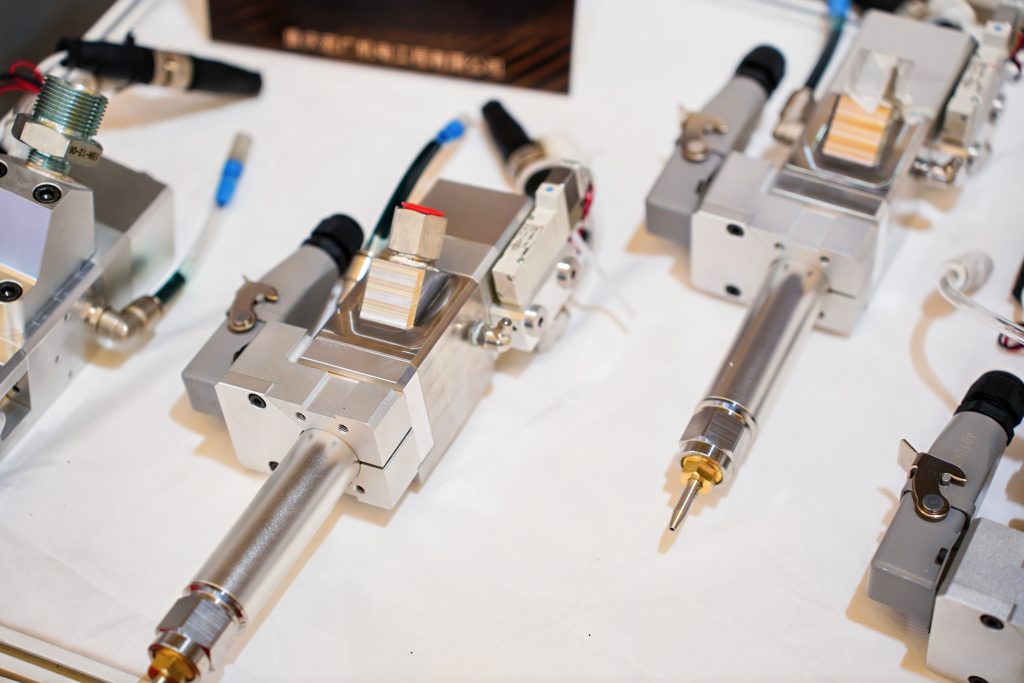
This guide covers five common automotive adhesive dispensing applications, their key equipment parameters, and practical selection criteria to help procurement engineers and process engineers make informed decisions.
1. Headlamp Sealing
Headlamp assembly requires continuous bead dispensing along the housing perimeter. The adhesive bead must be uniform, bubble-free, and consistent in width — any gap or irregularity compromises IP sealing performance.
Key parameters:
- Dispensing accuracy: ±0.5mm bead width consistency
- Flow rate: 5-20g/s, adjustable for different lamp sizes
- Compatible adhesive types: one-component PU and silicone sealants (Dow, Henkel systems)
- Drive type: pneumatic for low-to-mid volume; servo-driven for high-volume production
- Equipment: benchtop dispensing machine or robotic dispensing cell
Selection tip: Pneumatic pressure fluctuations cause inconsistent flow. Choose a dispensing valve with integrated pressure sensor feedback to maintain stable output throughout the dispense cycle.
2. Body NVH Applications
NVH treatments involve applying damping or sound-deadening adhesives to body panels, door inner liners, and floor pans. Coverage area is large, adhesive volume is high, but positional accuracy requirements are moderate.
Key parameters:
- Flow rate: 20-100g/s, high-volume output
- Metering accuracy: ±2% (relatively forgiving for NVH materials)
- Compatible adhesive types: asphalt-based, butyl, EPDM formulations
- Drive type: pneumatic booster pump
- Equipment: pneumatic dispensing gun + booster pump system
Selection tip: The main challenge is maintaining consistent output at high flow rates. Specify a booster pump system with a pressure regulator and accumulator tank to smooth out pressure spikes during high-volume dispensing.
3. Windshield Bonding
Windshield bonding is a safety-critical process. The structural polyurethane bead must maintain a consistent triangular cross-section — bond strength depends directly on bead geometry, adhesive volume, and cure conditions.
Key parameters:
- Dispensing accuracy: ±0.3mm bead profile control
- Metering repeatability: ±1%
- Compatible adhesive types: one-component PU structural adhesives (Sika, Dow), viscosity 3000-5000mPa·s
- Drive type: servo-driven (precision and stability are mandatory)
- Equipment: robotic dispensing system with servo-driven gun
Selection tip: This is a safety-related process. The dispensing system must support full traceability — flow monitoring, pressure logging, and per-part data recording. Gun temperature control accuracy should be within ±2°C to maintain consistent adhesive viscosity.
4. EV Thermal Management Module Potting
Electric vehicle power electronics — motor controllers, on-board chargers, DC-DC converters — require potting with thermally conductive encapsulants. The potting material must completely fill the module cavity with zero bubbles or voids.
Key parameters:
- Metering accuracy: ±0.5%
- Two-component ratio accuracy: ±1% by volume (ratio deviation affects thermal conductivity and mechanical strength)
- Compatible adhesive types: two-component epoxy or polyurethane thermally conductive potting compounds, viscosity 5000-20000mPa·s
- Degassing: required (vacuum or inline degassing)
- Equipment: two-component metering and dispensing system
Selection tip: Potting ratio accuracy is critical — deviations above 3% cause incomplete curing or reduced thermal conductivity. Select a system with both static and dynamic mixing capability. A vacuum degassing chamber is strongly recommended; target a void content below 0.5% after potting.
5. Electronic Control Unit (ECU) Sealing
ECU sealing involves applying small, precise amounts of sealant to housing seams and connector interfaces. Working space is tight, dispense volumes are low, and positional accuracy is high.
Key parameters:
- Minimum dispense volume: 0.01-0.1g (micro-dispensing)
- Positional accuracy: ±0.2mm
- Compatible adhesive types: silicone, epoxy, or UV-curable sealants
- Drive type: auger (screw) valve or piezoelectric valve
- Equipment: precision benchtop dispenser or desktop robot
Selection tip: For micro-volume dispensing consistency, auger-driven valves outperform pneumatic valves — they are less susceptible to pressure fluctuations and provide more repeatable small-volume shots. If using UV-curable sealants, verify that the valve wetted parts are UV-compatible, and plan for integrated UV curing lamp placement.
Selection Process Summary
Step 1: Define the application scenario and adhesive type (chemistry, viscosity, pot life, cure method).
Step 2: Use the parameter tables above to establish the required performance range for your specific application.
Step 3: Prepare a complete process specification document for suppliers — include adhesive type, viscosity, accuracy requirements, production cycle time, and ambient temperature range.
Step 4: Request on-site or factory trials. Focus on continuous-run stability (minimum 2 hours) and data consistency rather than single-shot performance.
Step 5: Evaluate spare parts availability and after-sales response time. For automotive production, ask: what is the guaranteed delivery time for critical spare parts? Is there a regional service team?
Conclusion
Choosing adhesive dispensing equipment for automotive manufacturing is not a one-size-fits-all decision. Each application — from headlamp sealing to ECU potting — has its own set of critical parameters. The key to successful selection is matching your specific process requirements against verified equipment capabilities, not marketing specifications.
For teams evaluating Chinese alternatives to established international brands, focus on three practical checkpoints: verified repeatability under production conditions, core component material specifications (seals, valve body, wear surfaces), and documented spare parts availability with guaranteed lead times.
If you need support with equipment selection for your automotive dispensing application, contact our engineering team for a free process assessment.